
conservation of energy
-
From Theory to Trust: How the Conservation of Energy Shaped Modern Thermodynamics

A foundational cornerstone of chemical engineering is the mass and energy balance. This principle states with absolute certainty that mass and energy are conserved. In a steady-state, continuous process, the mass and energy entering a system must precisely equal those exiting – not approximately, but exactly. If there’s a discrepancy in these numbers, it indicates… Continue reading
-
But what about heat?

The formulation of the conservation law for mechanical energy had its scientific roots in at least three areas of theoretical mechanics: (1) The principle of conservation of mechanical work… (2) The principle of conservation of vis viva… (3) The principle of conservation of (1) and (2) taken conjointly…that in every transfer of potential energy into… Continue reading
-
What caused the expanding universe to cool? (It may not be what you think)
Expansion leads to cooling. That’s what I was taught anyway. And so when I read that the expansion following the Big Bang caused the universe to cool, I first thought, “okay…” But then I thought some more. “Wait a minute! Expansion against what???” The reason a system cools as it expands it that it pushes… Continue reading
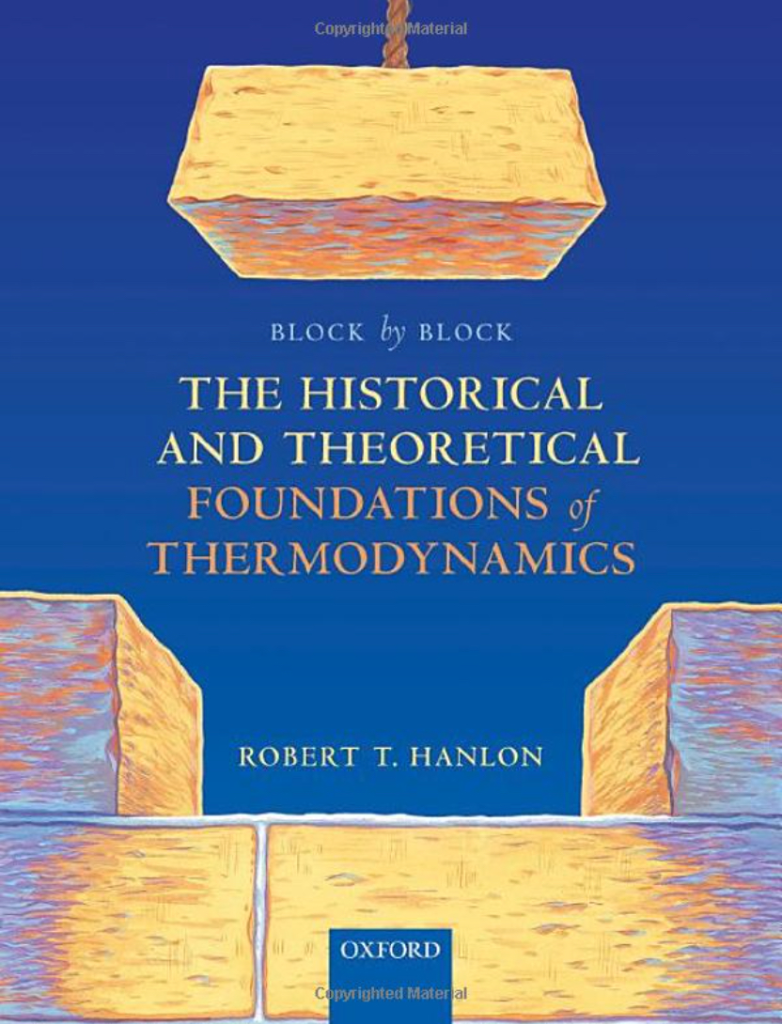
Block by Block – The Historical and Theoretical Foundations of Thermodynamics. “Hanlon has written a masterpiece.” – Mike Pauken, Senior Engineer, NASA’s Jet Propulsion Laboratory (JPL) and author of Thermodynamics for Dummies
SUBSCRIBE
About Me

Hi! I’m Bob Hanlon. After earning my Sc.D. in chemical engineering from the Massachusetts Institute of Technology and enjoying a long career in both industry and academia, I’ve returned to school, my own self-guided school, seeking to better understand the world of thermodynamics. Please join me on my journey.
You must be logged in to post a comment.