

My wife and I recently moved from Philadelphia to the small village where I grew up just outside Syracuse, NY. The landscape here is beautiful. Lakes, rivers, valleys, water falls, rich soil, green fields. One can’t help but wonder how this all came about. Reflecting on my eighth-grade Earth Science class, I realize that I missed learning about these natural wonders back then—partly due to my lack of interest and partly due to the uninspiring way the material was presented. I’ve always been drawn to compelling narratives, and the geological story of Upstate New York, with its dramatic tectonic shifts and mile-high glaciers, is one I’m eager to explore and write about, striving to make the story more engaging than I had experienced.
Pat Bickford
First things first. Before I could write, I naturally needed to learn. To kickstart the process, I reconnected with Professor Pat Bickford, former Professor and Chairman of the Department of Geology at Syracuse University from 1990 to 1997, Emeritus since. Having met Pat fifteen years ago, I knew his expertise would be invaluable. He welcomed me into his home on Cazenovia Lake, and we transformed his living room into our one-on-one classroom where his passion for geology was as evident as ever, even at 91 years of age. His eyes shined with a youthful enthusiasm for his science. I would have loved sitting in Pat’s classroom at S.U.
During our discussions, Pat introduced me to the “veil of time” concept in geology—the idea that we can hypothesize about the Earth’s geological history and gather data to test the hypotheses, but some events are so ancient they remain largely mysterious.
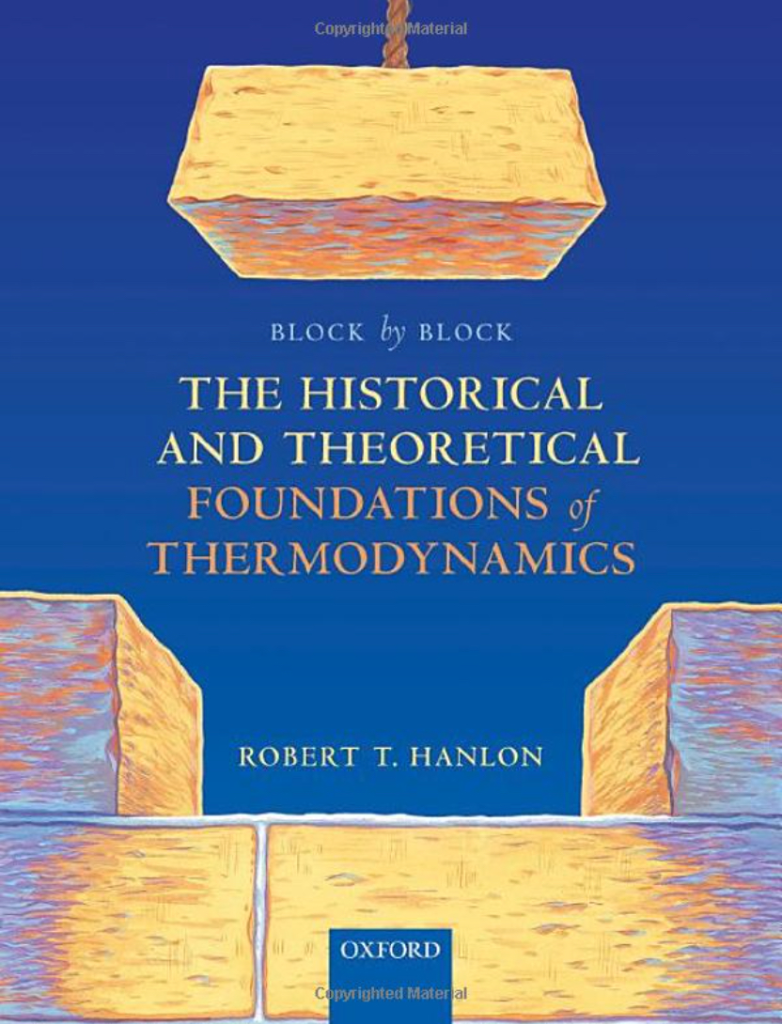
One ancient event of particular interest to me regarded the origin of Earth, specifically when it happen. My interest in this topic started while I was doing my research for Block by Block – The Historical and Theoretical Foundations of Thermodynamics and learned about the attempt by an early founder of thermodynamics, William Thomson, to determine the Earth’s age (here). So one of my first questions to Pat was, how do we know? Why isn’t this event hidden behind the veil along with the others? He smiled in response and then directed me to the pioneering work of Clair Patterson.
In 1948 Patterson, a PhD student at the University of Chicago, was asked to develop a new method for counting lead isotopes in rocks for his dissertation project. The idea was that his results, combined with the known decay rate of uranium to lead, could progress the use of radiometric dating to determine the age of the Earth.
But Patterson was faced with a big problem: the absence of ancient rocks on Earth. Prior to about 4 billion years ago, the Earth’s high temperature and violent atmosphere of falling asteroids and comets proved inhospitable to the survival of any rocks that did form. [1] Patterson’s solution to this problem? Meteorites.
In using this approach, Patterson assumed that 1) meteorites are leftover solid materials from the beginning of the solar system that remained unchanged even after they eventually fell to Earth (naturally not prior to ~4 billion years ago), and 2) if he could measure the age of these meteorites, then he would have an approximate age of Earth. To accomplish (2), Patterson sought to measure the relative concentrations of lead isotopes as opposed to uranium-to-lead ratios. This offered a more reliable approach and was based on the following:
- uranium-238 (U-238) decays to lead-206 (Pb-206)
- uranium-235 (U-235) decays to lead-207 (Pb-207)
- lead-204 (Pb-204) is naturally occurring
- because the half-life of U-238 is different than that of U-235, the rates of production of Pb-206 and Pb-207 are also different
- using Pb-204 to correct for the initial presence of lead in the meteors, Patterson could enter the values of Pb-206, Pb-207, and Pb-204 into existing aging models [2] to calculate the Earth’s age.
After spending much time and effort to remove all sources of lead contamination from his laboratory—this work resulted in major contributions involving the need for super-clean rooms for carrying out the studies and the need to remove lead from gasoline [3]—Patterson took highly accurate measurements of the lead isotopes in various meteorites, performed his calculations, and, in 1956, arrived at an answer: the Earth is 4.55 billion years old.
Back to Pat
After this fun age-of-Earth educational journey that Pat sent me on, I was excited for more. Unfortunately, life had other plans. Pat sadly passed away one month ago. While his mind was still firing on all cylinders, his body was not.
I want to do some more research on Pat’s own accomplishments in the world of geology. He didn’t speak much about himself, other than sharing some fun stories about his field work and about the science itself. But I do know that he played an important role in the world of geology and would like to do justice to this in a later post. I thought I was going to have more time with him to learn about this. I didn’t.
In honor of Pat and inspired by his encouragement, I will continue my own journey about upstate New Yrok and share what I learn, my goal being to make the material both accurate and engaging in a way that Pat would approve of. So stay tuned to learn the story behind a landscape featuring the Finger Lakes, Oneida Lake, Lake Ontario, the Ontario Lowlands, the Tug Hill Plateau, the St. Lawrence River, the Mohawk River, the Hudson River, the Adirondack Mountains, the Taconic Mountains, and the scenic and enjoyable (except in winter) up-and-down drive along Rt. 20 from Cazenovia to Skaneateles.
Acknowledgements
As I’m on a steep learning curve in this world of geology, I needed help in ensuring the accuracy of the above post. Special thanks in this regard to Stephen Marshak, Professor of Geology at the University of Illinois, Urbana-Champaign, and to Scott Samson, Associate Chair and Professor: Radiogenic Isotope & Geochronology at Syracuse University.
END
[1] It wouldn’t be until 1983 that the oldest rock on Earth (Acasta Gneiss; appr. 4.03 billion years old) was discovered in Canada.
[2] Patterson, Claire, “Age of meteorites and the earth,” Geochimica et Cosmochimica Acta, Volume 10, Issue 4, October 1956, Pages 230-237. (here)
[3] During his efforts to remove lead contamination from his samples, Patterson detected increased lead levels in the environment and became a leading advocate for lead reduction in industry, such as his work to remove lead from gasoline.


Leave a Reply